🖤 Black Cumin Seed
Nigella sativa
Family:
Ranunculaceae (Buttercup Family)
Also Known As:
Black Cumin • Black Caraway • Kalonji • Habbatul Barakah (“Seed of Blessing”)
Relationship
🤝 Thoughtfully Sourced
🌎 Always Studying
Meet the Plant
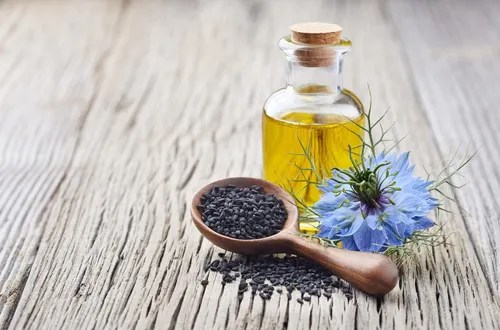
Black cumin is a graceful annual with delicate fern-like foliage and star-shaped flowers that mature into distinctive seed capsules filled with tiny black seeds.
Although sometimes called black cumin or black caraway, Nigella sativa is neither a true cumin nor a true caraway.
It belongs to the buttercup family and has been cultivated for thousands of years throughout the Middle East, North Africa, and parts of Asia.
Its small seeds have flavored traditional foods for centuries while also earning a respected place in herbal traditions around the world.
Parts Traditionally Used
The small black seeds are the most valued part of the plant.
Traditional preparations include:
🖤 Whole seeds
🖤 Ground seeds
🖤 Botanical oils
🖤 Botanical extracts
The seeds develop inside inflated seed capsules that are harvested once fully mature and dry.
Traditional Herbal Uses
Black cumin seed has been appreciated for generations as both a flavorful culinary spice and a nourishing botanical.
Traditionally it has been used to support healthy digestion, everyday immune wellness, healthy skin, comfortable breathing, and overall vitality.
Its naturally occurring compounds—including thymoquinone—continue to be studied for their antioxidant, anti-inflammatory, and antimicrobial properties.
In the Kitchen
Black cumin seeds have a warm, earthy flavor with notes of pepper, toasted onion, and oregano.
They are traditionally enjoyed in:
🖤 Flatbreads
🖤 Curries
🖤 Pickles
🖤 Rice dishes
🖤 Roasted vegetables
🖤 Spice blends
Lightly toasting the seeds before cooking enhances both their aroma and flavor.
A Few Considerations
Black cumin seed has a long history of culinary use and is generally well tolerated when enjoyed as a food.
Those who are pregnant should consult their healthcare provider before using concentrated herbal preparations.
Individuals taking blood-thinning medications, blood pressure medications, or medications that affect blood sugar should also consult their healthcare provider before using concentrated preparations.
As with any botanical, discontinue use if sensitivity or an allergic reaction develops.
Concentrated botanical oils should always be used according to their intended purpose and in appropriate amounts.
In My Apothecary
You may find black cumin featured in:
🌿 Botanical Oils
🌿 Botanical Skincare
🌿 Herbal Salves
🌿 Seasonal Botanical Preparations
🌿 Botanical Wellness Blends
Harvest & Preparation
Black cumin is harvested after the seed pods have dried on the plant and turned brown.
The mature capsules are collected, allowed to finish drying, and gently opened to release their tiny black seeds.
These may be used whole, freshly ground, or pressed into a rich botanical oil.
Keeper’s Notes
Black cumin doesn’t demand attention.
Its flowers are delicate. Its seeds are tiny.
Yet for thousands of years, people have carefully gathered them, passed them from one generation to the next, and treasured them in both the kitchen and the apothecary.
It’s a gentle reminder that the smallest things often carry remarkable gifts.
Meet the Plant
Botanical Name:
Nigella sativa
Plant Family:
Buttercup (Ranunculaceae)
Life Cycle:
Annual
Parts Traditionally Used:
Seeds
Native Home:
Eastern Mediterranean, Western Asia, and North Africa
Growing Habit:
Delicate annual with finely divided foliage, pale blue or white flowers, and distinctive balloon-like seed capsules.
Garden Friends:
Honeybees and other beneficial pollinators
Harvest:
Seed capsules are gathered after they have dried on the plant and the seeds have fully matured.
Known For:
Aromatic culinary seeds, nourishing botanical oil, and centuries of traditional use throughout the Middle East and Asia.
See Also🩶Black Tourmaline
When used with Black Cumin it creates resilience and defense.
Continue Wandering…
🍃 Previous Plant …… 🌱 Next Plant
Return to 📖Herbal Studies
Return to🌿The Herbarium
 5K High Altitude Apothecary