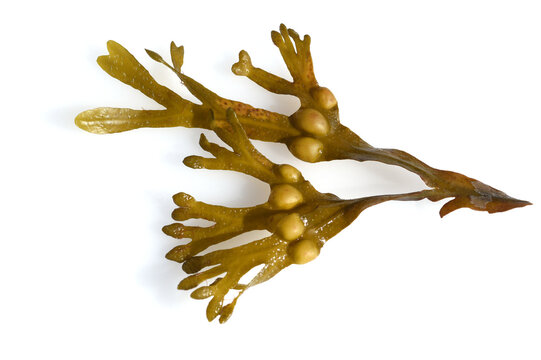
🌊 Bladderwrack
Fucus vesiculosus
A Plant Held Between Land and Sea
Bladderwrack is a brown seaweed of cold northern waters,
found along rocky shores of the Atlantic
and in other northern coastal regions.
Its name comes from the small air-filled bladders that appear along its fronds.
These pockets of air help lift the seaweed toward the light
while the rest of the plant remains anchored below.
It is an elegant solution to a difficult place to grow:
Hold fast below.
Rise toward the light above.
🌿 What Bladderwrack Brings
Bladderwrack has a long history as both a food
and traditional herbal material.
It naturally contains iodine,
along with minerals,
soluble fibers and characteristic brown-seaweed compounds
including alginates,
fucoidans
and fucoxanthin.
Its iodine content is perhaps what made bladderwrack most famous.
Iodine is required for the production of thyroid hormones
but with bladderwrack,
more is not necessarily better.
The amount present in seaweed can vary substantially
according to where
and how it grew.
That makes bladderwrack a plant to use with knowledge
rather than enthusiasm alone.
🦋 Thyroid & Iodine
The thyroid requires iodine to make thyroid hormones.
For someone who is iodine deficient,
dietary iodine matters.
But bladderwrack should not be thought of as a general treatment
for an underactive thyroid.
Too much iodine can also disturb thyroid function,
and supplemental iodine deserves particular care when thyroid disease
or thyroid medication is already part of the picture.
The mineral is necessary.
The amount still matters.
🌊 The Seaweed Fibers
Bladderwrack contains alginate,
a soluble fiber characteristic of brown seaweeds,
as well as other polysaccharides.
These compounds help explain
some of the traditional interest in bladderwrack for digestion
and also make brown seaweeds interesting subjects of modern research.
Fucoidans
and the brown pigment fucoxanthin
are being studied for a variety of biological activities,
including antioxidant
and inflammatory pathways.
Much of that research is still emerging,
however.
A promising compound in a laboratory is not the same thing
as a proven treatment in a human body.
🤎 Skin
Bladderwrack also has a history of topical use.
Its polysaccharides
and antioxidant compounds
have attracted research interest for skin hydration,
elasticity
and the extracellular structures that help support skin.
For the apothecary,
that makes bladderwrack interesting in two very different ways:
as something we may eat
and something we may formulate with.
⚓ Source Matters
Seaweed lives by taking things from the water around it.
That is part of what makes it nutritionally interesting
and part of what makes sourcing so important.
Depending upon the growing environment,
seaweeds can accumulate unwanted contaminants,
including inorganic arsenic
and other heavy metals.
For bladderwrack intended for food or internal preparations,
I would choose a supplier that provides reliable identity
and contaminant testing
rather than buying solely on the words
wildcrafted,
natural,
or organic.
Where something grows becomes part of what it carries.
🌿 The Keeper’s Note
Bladderwrack spends its life between forces.
Anchored to stone.
Moved by water.
Lifted by air.
Fed by the sea.
Perhaps that is part of what makes sea plants so interesting.
They remind us that nourishment does not come only from soil.
Sometimes the garden is underwater.
Hold fast below.
Rise toward the light above.
A small safety note
Because bladderwrack can contain substantial
and variable amounts of iodine,
it deserves particular care for anyone with a thyroid condition
or taking thyroid medication.
Seaweed products can also vary in contaminant levels,
so source and testing matter.
Explore Harmonious 🩵 Aquamarine
🌱 Previous Plant …… 🌱 Next Plant
Return to 🌿 The Herbarium
Visit 💡 The Keeper’s Epiphanies
Reflections,
discoveries,
and quiet moments gathered along the journey.

