🌿 Burdock
Arctium lappa
Family:
Asteraceae (Daisy Family)
Also Known As:
Greater Burdock • Gobo • Lappa • Beggar’s Buttons
Relationship
🤝 Thoughtfully sourced
🌎 Studying
Meet the Plant
Botanical Name:
Arctium lappa
Family:
Asteraceae (Daisy Family)
Also Known As:
Greater Burdock • Gobo • Lappa • Beggar’s Buttons
Parts Traditionally Used:
First-year root (primarily), leaves, and seeds
Growing Habit:
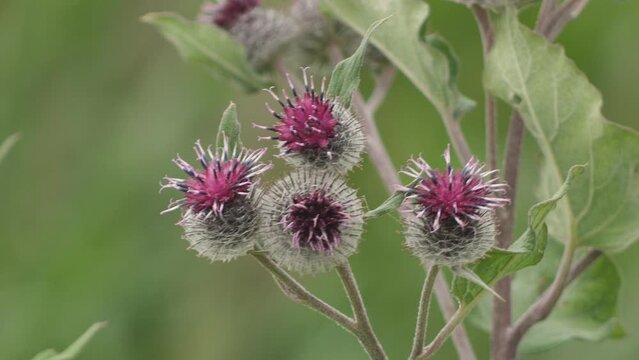
Biennial with large heart-shaped leaves and purple thistle-like flowers
Native To:
Europe and Asia; now naturalized throughout much of North America
Garden Friends:
Bees, butterflies, and other pollinators
Harvest Season:
Autumn of the first year, before the flowering stalk develops.
Burdock is a biennial plant with broad, heart-shaped leaves and distinctive burrs that cling to passing animals—a clever way the plant spreads its seeds.
During its first year, it quietly stores energy in its long taproot.
It is this first-year root that has been treasured for centuries as both food and medicine.
In Japan, burdock root—known as gobo—is a beloved vegetable, appreciated for its earthy flavor and nourishing qualities.
Parts Traditionally Used
The first-year root is the primary part traditionally harvested.
It has long been valued as both a nourishing food and a respected botanical ingredient.
Leaves and seeds have also appeared in traditional herbal practices, though the root remains the best known.
Traditional Herbal Uses
For generations, burdock root has been valued as a nourishing botanical companion and an important part of traditional herbal practices around the world.
Traditionally it has been used to support healthy skin and a clear complexion, normal digestive function, the body’s natural cleansing processes, comfortable movement, overall vitality, and everyday nourishment through its naturally occurring prebiotic fiber.
Modern research continues to explore burdock’s naturally occurring antioxidants and other plant compounds, helping us better understand why this humble root has remained a treasured botanical for centuries.
In the Kitchen
Beyond the apothecary, burdock has earned its place at the table.
Known as gobo in Japanese cuisine, the crisp young root is commonly added to stir-fries, soups, stews, and pickled vegetable dishes, where its earthy flavor pairs beautifully with other seasonal ingredients.
A Few Considerations
Burdock has a long history of culinary use and is generally enjoyed safely as a food.
Those who are pregnant or breastfeeding should consult their healthcare provider before using concentrated herbal preparations.
Individuals who are sensitive to plants in the daisy family (Asteraceae), including ragweed, daisies, and chrysanthemums, may also experience sensitivity to burdock.
If you take prescription medications—particularly those that affect blood sugar or fluid balance—it is wise to speak with your healthcare provider before using concentrated herbal preparations.
In My Apothecary
You may find burdock featured in:
🌿 Botanical Tea Blends
🌿 Botanical Extracts
🌿 Seasonal Formulations
Keeper’s Notes
Burdock has always felt like one of the great teachers of patience.
During its first year, nearly all of its work happens where no one can see it.
While the leaves gather sunlight above ground, the root quietly grows deeper, storing nourishment for the seasons ahead.
Perhaps that’s why I’ve always admired this plant.
It reminds us that meaningful growth often begins below the surface, long before anyone notices.
Continue Wandering…
Meet the plants that inspire many of the botanical formulas.
🍃 Previous Plant …… 🌱 Next Plant
🍶 Elixirs & Extracts
Handcrafted botanical preparations honoring the unique character of each plant.
📝 Keeper’s Notes
Reflections, discoveries, and quiet moments gathered along the journey.
 5K High Altitude Apothecary