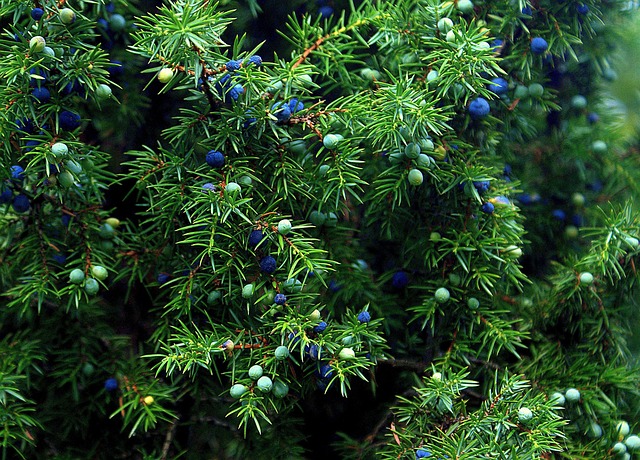
Juniper
Juniperus communis
Family:
Cupressaceae (Cypress Family)
Also Known As:
Common Juniper • Ground Juniper • Mountain Juniper • Gin Berry • Cade • Savin • Aiteal • Enebær
Relationship
🏔️ Wild Gathered
🌎 Always Studying
Meet the Plant
Botanical Name:
Juniperus communis
Family:
Cupressaceae (Cypress Family)
Parts Traditionally Used:
Berries • Needles • Wood
Growing Habit:
Evergreen shrub or small tree
Native Range:
Northern Hemisphere
Garden Friends:
Birds, pollinators, and wildlife
Favorite Season:
Autumn harvest
Juniper is one of the world’s most resilient plants.
It thrives where many others cannot—from arctic tundra and windswept mountain peaks to rocky hillsides, sandy dunes, and open heathlands.
Unlike many members of the cypress family that develop scale-like foliage as they mature, Juniperus communis keeps its sharp, needle-like leaves throughout its life.
Native across the cool regions of the Northern Hemisphere, juniper has one of the widest natural ranges of any woody plant, growing throughout North America, Europe, and northern Asia.
Parts Traditionally Used
The aromatic berries are the part most commonly gathered for culinary and herbal use.
The wood, needles, and essential oil have also played important roles in traditional practices around the world.
Traditional Herbal Uses
For centuries, juniper has been appreciated as both a flavorful culinary spice and a respected botanical companion.
Traditionally, the berries have been used to support healthy digestion following rich meals, normal urinary tract function, the body’s natural cleansing processes, comfortable movement, overall vitality, and seasonal wellness through their naturally aromatic compounds.
Juniper berries are also the defining botanical that gives gin its distinctive flavor.
Modern research continues to explore the plant’s naturally occurring essential oils, flavonoids, and antioxidants, helping us better understand why juniper has remained a valued botanical across many cultures.
In the Kitchen
Juniper berries bring a fresh, resinous flavor with notes of pine and citrus.
Traditionally they have been enjoyed in:
🦌 Wild game
🥬 Sauerkraut
🍲 Stews
🥕 Roasted vegetables
🥒 Fermented foods
Their distinctive woodland flavor pairs beautifully with hearty dishes and other warming herbs and spices.
A Few Considerations
Juniper berries have a long history of culinary use and are generally enjoyed safely in the amounts traditionally used in cooking.
Concentrated herbal preparations deserve more thoughtful use.
Those who are pregnant or breastfeeding should avoid using concentrated preparations unless advised by a qualified healthcare professional.
Individuals with existing kidney disease, or those taking medications that affect blood sugar, blood pressure, or kidney function, should consult their healthcare provider before using concentrated herbal preparations.
Long-term internal use of concentrated juniper preparations is generally not recommended.
In My Apothecary
You may find juniper featured in:
🌿 Botanical Tea Blends
🌿 Botanical Oils
🌿 Seasonal Botanical Preparations
🌿 Aromatic Ritual Blends
Harvest & Preparation
Juniper berries mature slowly, often taking two years to fully ripen.
They are traditionally gathered in autumn when their deep blue color
and aromatic oils are at their peak.
The berries may be used whole
lightly crushed
infused
or incorporated into botanical preparations
each method revealing a different aspect of the plant’s character.
Keeper’s Notes
Juniper has always felt like a guardian of wild places.
It grows where winters are harsh, winds are relentless, and the soil offers very little.
Yet year after year
it remains evergreen.
When I walk among junipers
I’m reminded that resilience doesn’t have to be loud.
Sometimes strength simply means continuing to grow
exactly where you’ve been planted.
See Also 🩶Black Tourmaline
With Juniper = protection and the threshold.
Continue Wandering…
🌱 Previous Plant … 🌱 Next Plant
Back to 🌿 The Herbarium
Meet the plants that inspire many of the botanical formulas.
Reflections from the garden, mountains, and studio.
Explore botanical skincare and herbal creations.
 5K High Altitude Apothecary