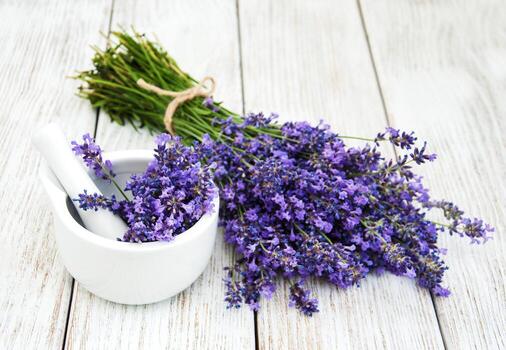
💜 Lavender
Lavandula angustifolia (and other Lavandula species)
Family:
Lamiaceae (Mint Family)
Also Known As:
English Lavender • True Lavender • Common Lavender
Relationship
🤝 Thoughtfully Sourced
🌎 Always Studying
Meet the Plant
Few herbs are as instantly recognizable as lavender.
Native to the sun-drenched hillsides of the Mediterranean, lavender has been cherished for centuries for its beauty, fragrance, and remarkable versatility.
Its name comes from the Latin lavare, meaning “to wash,” reflecting its long history of scenting baths, linens, and homes.
Silvery-green foliage and graceful purple flower spikes bloom through the warmth of summer, filling the air with a calming fragrance while welcoming bees, butterflies, and other beneficial pollinators.
Parts Traditionally Used
🌸 Flowers
The fragrant flowers are the most widely used part of the lavender plant and have been cherished for generations in both the home and the apothecary.
Traditionally they are prepared as:
🍵 Botanical teas
🫒 Botanical oils
💧 Hydrosols
🪻 Dried flowers
🪻 Sachets
🍪 Culinary preparations (English Lavender)
The leaves are occasionally used, though the flowers are especially prized for their gentle fragrance and calming character.
Traditional Herbal Uses
Lavender has been treasured throughout history as both a comforting household herb and a trusted botanical companion.
Traditionally it has been used to support relaxation during times of stress, restful sleep, emotional balance, healthy skin, and seasonal wellness.
Its naturally occurring aromatic compounds—including linalool and linalyl acetate—continue to be studied for their soothing, antioxidant, and antimicrobial properties.
In the Garden & Kitchen
Lavender is equally at home in the garden and the pantry.
In the garden, it is cherished for:
🐝 Welcoming bees and butterflies
☀️ Thriving in sunny, well-drained soil
💧 Requiring very little water once established
🪻 Filling the summer garden with fragrance
In the kitchen, English Lavender (Lavandula angustifolia) has traditionally been enjoyed in:
🍵 Herbal teas
🍪 Shortbread and baked goods
🍯 Honey
🍋 Lemonades
🥄 Syrups
🌿 Herbes de Provence
Its delicate floral flavor is best enjoyed with a light hand.
A Few Considerations
Lavender has a long history of culinary and traditional herbal use and is generally considered a gentle botanical when enjoyed as a culinary herb or tea.
Only English Lavender (Lavandula angustifolia) is traditionally recommended for culinary use.
Concentrated lavender essential oil should always be properly diluted before topical use and should never be applied directly to the skin.
Although the fresh plant is only mildly irritating if consumed in large quantities, concentrated essential oils should be used with caution around pets—particularly cats—and should never be applied directly to animals unless formulated specifically for veterinary use.
As with any botanical, discontinue use if irritation or sensitivity develops.
In My Apothecary
You may find lavender featured in:
🌿 Botanical Tea Blends
🌿 Botanical Oils
🌿 Botanical Skincare
🌿 Herbal Bath Rituals
🌿 Sachets & Aromatic Preparations
🌿 Seasonal Botanical Formulations
Harvest & Preparation
Lavender is traditionally harvested just as the first flowers begin to open, when its aromatic oils are at their peak.
Bundles are often hung upside down in a cool, shaded place to dry, preserving both their fragrance and beautiful color.
The dried flowers may be enjoyed in teas, sachets, infused oils, culinary recipes, and botanical skincare.
Keeper’s Notes
Lavender has always reminded me that peace isn’t the absence of activity.
The bees certainly don’t think so.
Even when the garden is buzzing with life, lavender remains calm, steady, and welcoming. It simply stands in the sunshine, offering fragrance to anyone who passes by.
Perhaps that’s why people have loved it for so many centuries.
It teaches us that gentleness can be one of the strongest things we cultivate.
Meet the Plant
Botanical Name:
Lavandula angustifolia (and other Lavandula species)
Plant Family:
Mint (Lamiaceae)
Life Cycle:
Evergreen perennial subshrub
Parts Traditionally Used:
Flowers (primarily), Leaves
Native Home:
Mediterranean region, North Africa, and parts of Western Asia
Growing Habit:
Compact, woody shrub with silvery foliage and fragrant flower spikes.
Garden Friends:
Honeybees, native bees, butterflies, and other beneficial pollinators
Harvest:
Flower spikes are gathered just as the first blossoms begin to open.
Known For:
Calming fragrance, pollinator-friendly blooms, culinary versatility, and centuries of use in botanical traditions.
See also💜 Amethyst
Quiet enough to hear.
Continue Wandering…
Back to 🌿The Herbarium
 5K High Altitude Apothecary