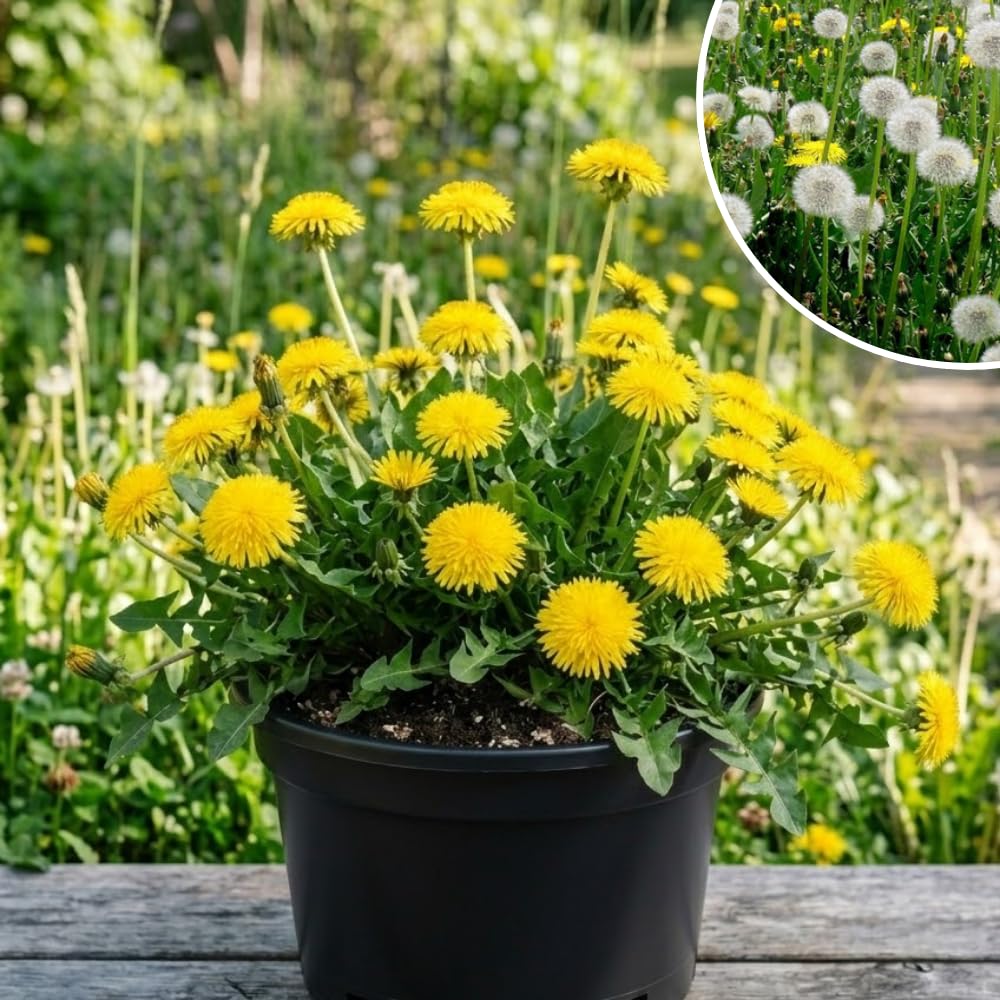
Dandelion
Taraxacum officinale
Family:
Asteraceae (Daisy Family)
Also Known As:
Lion’s Tooth • Priest’s Crown • Blowball • Puffball
Relationship
🌱 Growing in My Garden
🏔️ Wild Gathered
🤝 Thoughtfully Sourced
🌎 Always Studying
Meet the Plant
Few plants have been misunderstood as often as the dandelion.
Its name comes from the French dent de lion, meaning “lion’s tooth,” inspired by the deeply toothed edges of its leaves.
Each spring, brilliant golden blossoms appear, later transforming into the familiar white seed heads that drift on the wind, carrying the next generation wherever they land.
Though often dismissed as a lawn weed, dandelion has nourished people and wildlife for centuries.
Every part of the plant offers a gift, making it one of nature’s most generous companions.
Parts Traditionally Used
Every part of the dandelion has been traditionally valued.
🍃 Leaves
fresh greens, teas, botanical preparations
🌺 Flowers
teas, infused oils, syrups, jellies, wines, and edible garnishes
🫚 Roots
teas, botanical extracts, roasted beverages, and botanical oils
The entire plant has been welcomed into kitchens and home apothecaries throughout the world.
Traditional Herbal Uses
Dandelion has been treasured for generations throughout Europe, Asia, and North America as both a nourishing food and a trusted botanical companion.
Traditionally it has been used to support healthy digestion, healthy liver function, comfortable fluid balance, healthy skin, and everyday nourishment.
Rich in naturally occurring vitamins, minerals, antioxidants, and bitter plant compounds, dandelion continues to be studied for its antioxidant, anti-inflammatory, and skin-supportive properties.
In the Kitchen
Few wild plants are as versatile as dandelion.
Enjoy it as:
🥗 Fresh spring salads
🥬 Sautéed greens
🍵 Herbal teas
☕ Roasted root coffee substitute
🥞 Flower fritters
🍯 Dandelion jelly
🍷 Dandelion wine
Young spring leaves are tender and pleasantly bitter, while roasted roots offer a rich, earthy flavor without caffeine.
A Friend to the Garden
Dandelion gives generously to more than people.
🐝 One of the first spring nectar sources for honeybees and native pollinators
🌱 Deep taproots help loosen compacted soil and draw nutrients toward the surface
🦋 Supports butterflies and many beneficial insects
🌼 One of nature’s pioneer plants, thriving where healing begins
A Few Considerations
Dandelion has a long history of both culinary and traditional herbal use and is generally considered a gentle botanical for most people.
Individuals who are sensitive to members of the daisy family (Asteraceae), including ragweed, daisies, and chrysanthemums, may also be sensitive to dandelion.
The plant’s milky sap may cause skin irritation in some individuals.
If you take medications that affect blood clotting, blood sugar, or fluid balance, it is wise to consult your healthcare provider before using concentrated herbal preparations.
Those who are pregnant or breastfeeding should also seek professional guidance before using medicinal amounts.
When gathering dandelion from the wild, harvest only from areas that are free of pesticides, herbicides, roadside contamination, and other environmental pollutants.
In My Apothecary
You may find dandelion featured in:
🌿 Botanical Tea Blends
🌿 Botanical Oils
🌿 Botanical Extracts
🌿 Herbal Salves
🌿 Seasonal Botanical Preparations
Harvest & Preparation
Each season offers a different gift.
Young leaves are gathered in spring before flowering for their tender flavor.
Flowers are harvested as they fully open on warm, sunny days.
Roots are traditionally lifted in autumn, when the plant has stored a season’s worth of nourishment beneath the soil.
Each part is carefully prepared according to its own unique character.
Keeper’s Notes
Every spring I smile when I see the first dandelion bloom.
Some people hurry to pull it.
The bees hurry to visit it.
I’ve always found that interesting.
Perhaps dandelion’s greatest lesson is that value isn’t determined by popularity.
Sometimes the plants we overlook are quietly feeding the soil, nourishing the pollinators, and offering gifts we’ve forgotten how to recognize.
Meet the Plant
Botanical Name:
Taraxacum officinale
Plant Family:
Daisy (Asteraceae)
Life Cycle:
Hardy perennial
Parts Traditionally Used:
Leaves • Flowers • Roots
Native Home:
Europe and Asia; now naturalized throughout much of the world
Growing Habit:
Low-growing perennial with deeply toothed leaves, bright golden flowers, and distinctive globe-shaped seed heads.
Garden Friends:
Honeybees, native bees, butterflies, hoverflies, and many other beneficial insects
Harvest:
Leaves are gathered in spring, flowers throughout bloom, and roots in autumn after the plant has stored its energy underground.
Known For:
Nourishing every part of the plant, supporting pollinators, and reminding us that what many call a weed can also be one of nature’s greatest gifts.
Continue Wandering…
Back to 🌿The Herbarium
 5K High Altitude Apothecary