❤️Glass
Fire,
Transformation
& the Story of Becoming
Glass begins with earthly materials transformed by extraordinary conditions
sometimes through the fire of the Earth,
sometimes through human hands,
and sometimes through both.
Glass holds an unusual place in the Litharium.
Some glass erupts from the Earth.
Some is deliberately created.
And some begins in human hands only to be returned to water,
stone,
wind,
and time.
They may share the language of glass,
but they do not share the same story.
And here,
the story of becoming matters.
🌋 Natural Glass
When the Earth Makes Glass
Under the right conditions,
nature can create glass without any help from us.
When molten material cools so rapidly
that crystals do not have sufficient time to develop,
a glassy structure can form.
🖤 Obsidian
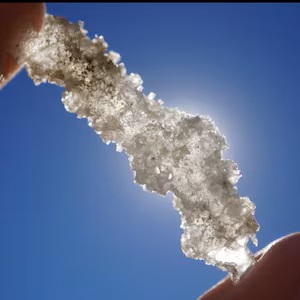
Obsidian is volcanic glass formed when silica-rich lava cools rapidly.
Its different appearances arise from variations in composition,
inclusions,
bubbles,
crystallization,
and the way light interacts with the material.
Visit 🖤 Obsidian
🔥 Human-Made Glass
When We Tend the Fire
Humans discovered long ago that earthly materials
could be transformed through heat.
Silica,
minerals,
metallic compounds,
pigments,
temperature,
timing,
and technique can become something that did not exist
before someone created the conditions for it.
Human-made does not mean without a story.
It simply means we became part of the story.
❤️ Goldstone
Goldstone is a type of aventurine glass containing sparkling metallic crystals.
Its formation depends upon carefully controlled conditions
that allow those brilliant inclusions to develop within the glass.
Continue to ❤️ Goldstone
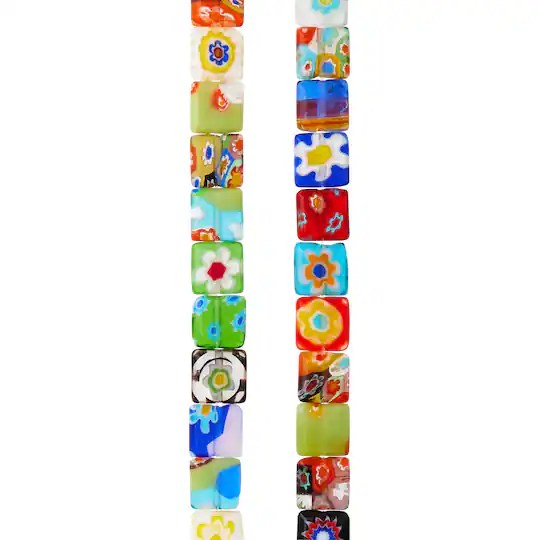
🌸 Millefiori Glass
Millefiori means “a thousand flowers.”
Colored glass rods are arranged into patterns,
fused together,
stretched into canes,
and sliced to reveal the tiny designs held within.
Each slice reveals what was already arranged inside.
Continue to 🌸 Millefiori Glass
🔹 Seed Beads
Tiny pieces of glass become something entirely different when repeated,
arranged,
woven,
strung,
and combined.
Individually small.
Together capable of creating pattern.
Continue to 🔹 Seed Beads
💎 Swarovski
Swarovski demonstrates another way humans work with glass:
not only creating the material,
but carefully shaping,
coating,
cutting,
and finishing it to create different expressions of light.
Some sparkle through precisely cut facets.
Others carry the softer glow of pearl.
The hand of the maker becomes part of the story.
Continue to 💎 Swarovski Crystals
Continue to 🤍 Swarovski Pearls
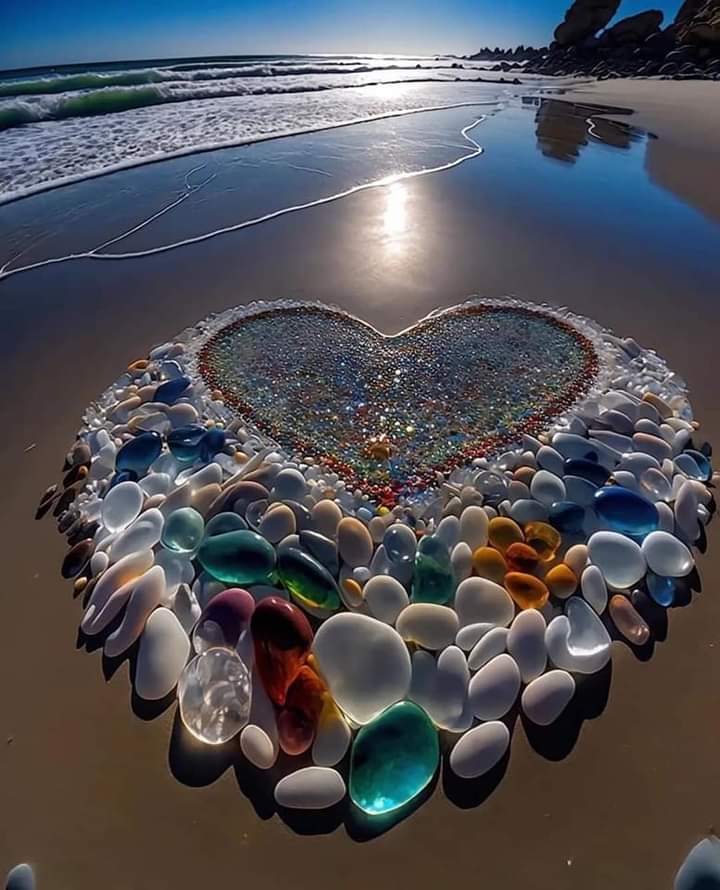
🌊 Sea Glass
When We Make It—and Get It Back
Sea Glass belongs somewhere between the other two families.
It begins as human-made glass.
Then we lose it,
discard it,
or leave it behind.
And the Earth takes over.
Water moves it.
Sand abrades it.
Stone tumbles it.
Time softens its edges and frosts its surface.
What returns to us is still human-made glass
but it carries an environmental history it did not possess
when it first left the glassmaker.
Continue to 🌊 Sea Glass
🔥 Three Ways of Becoming
Perhaps the simplest way to understand the Glass family is this:
🌋 Obsidian
Earth made the glass.
🔥 Goldstone,
Millefiori,
Seed Beads & Crystal Glass
humans made the glass.
🌊 Sea Glass
humans made it,
and Earth changed it again.
None needs to pretend to be the other.
Their differences are precisely what make them interesting.
❤️ The Keeper’s Note
The recipe may tell us what something is.
But there is another question I find equally interesting:
What happened while it was becoming?
Obsidian remembers volcanic fire.
Goldstone remembers the glassmaker’s fire.
Sea Glass remembers both human hands
and the long movement of water.
The material matters.
The maker matters.
The environment matters.
The journey matters.
Perhaps what something is
and what it has traveled through
are both part of its story.

